Dark Art
Krampus
Christmas Folklore
Europe
Krampus. ah, Krampus…
Santa’s demon
A tradition from some parts of Europe, and the US – where immigrants took the stories with them – Krampus has been growing in popularity as pop culture embraces the fascinatingly macabre figure. In most Christmas stories, the worst you’ll get for being on the naughty list is a lump of coal. But in Krampus stories? The really naughty are at risk of a visit from the man himself.
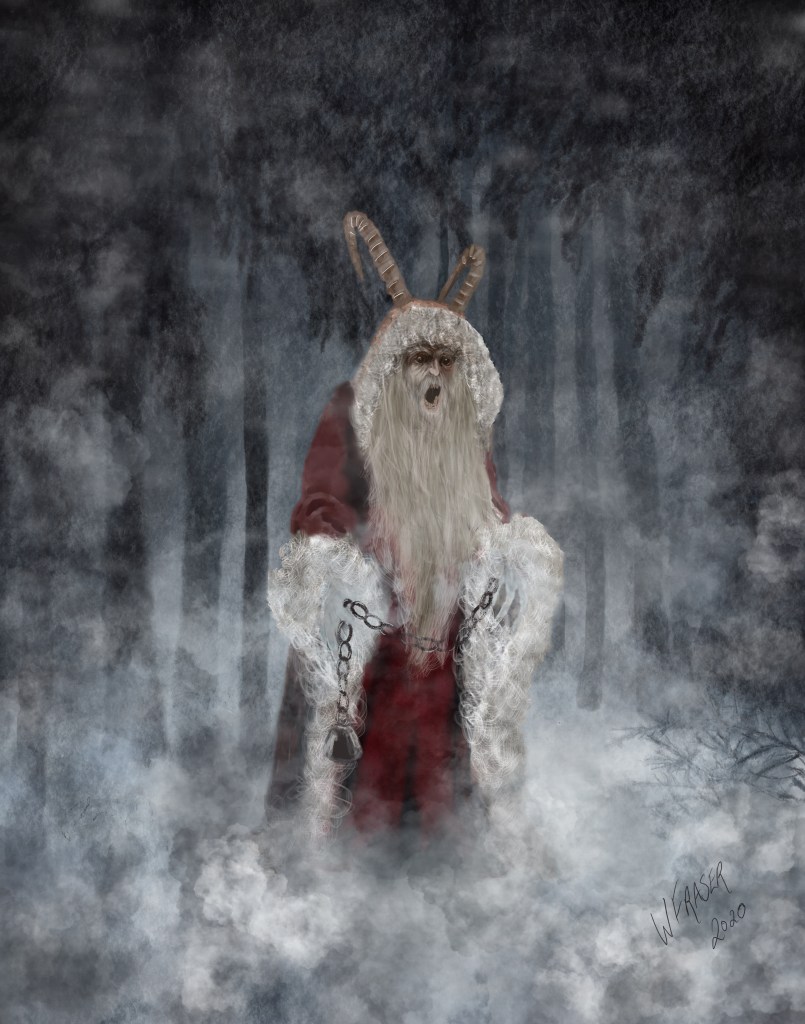
Heralded by the bells which hang on chains the demon likes to thrash around, he carries a bundle of birch twigs to beat the naughty with.
And if you’ve really been bad?
Like Santa, Krampus has a sack. Only Krampus’ sack isn’t for bringing presents, it’s for taking away the naughtiest children to torment for their wicked deeds.
So be good for goodness sake, or else you might be very sorry…
Written by lukegreensmithscarybits
The Horrifying History of Krampus – By Wanda Fraser
A half-goat, half-demon figure from Alpine folklore, Krampus serves as a dark counterpart to Saint Nicholas in Christmas traditions. Emerging from pagan customs, Krampus symbolizes the punishment of naughty children and the balance of reward and retribution during the festive season. His name derives from the Old High German word krampen, meaning “claw.”
Thought to have originated in pre-Christian Alpine traditions Krampus has ties to pagan rituals of winter, particularly those celebrating Perchten, wild spirits believed to chase away evil and ensure fertility and prosperity. With the spread of Christianity, Krampus became incorporated into Saint Nicholas customs, blending Christian morality with older pagan imagery. By the 17th century, Krampus had become a firmly entrenched figure in European holiday traditions.
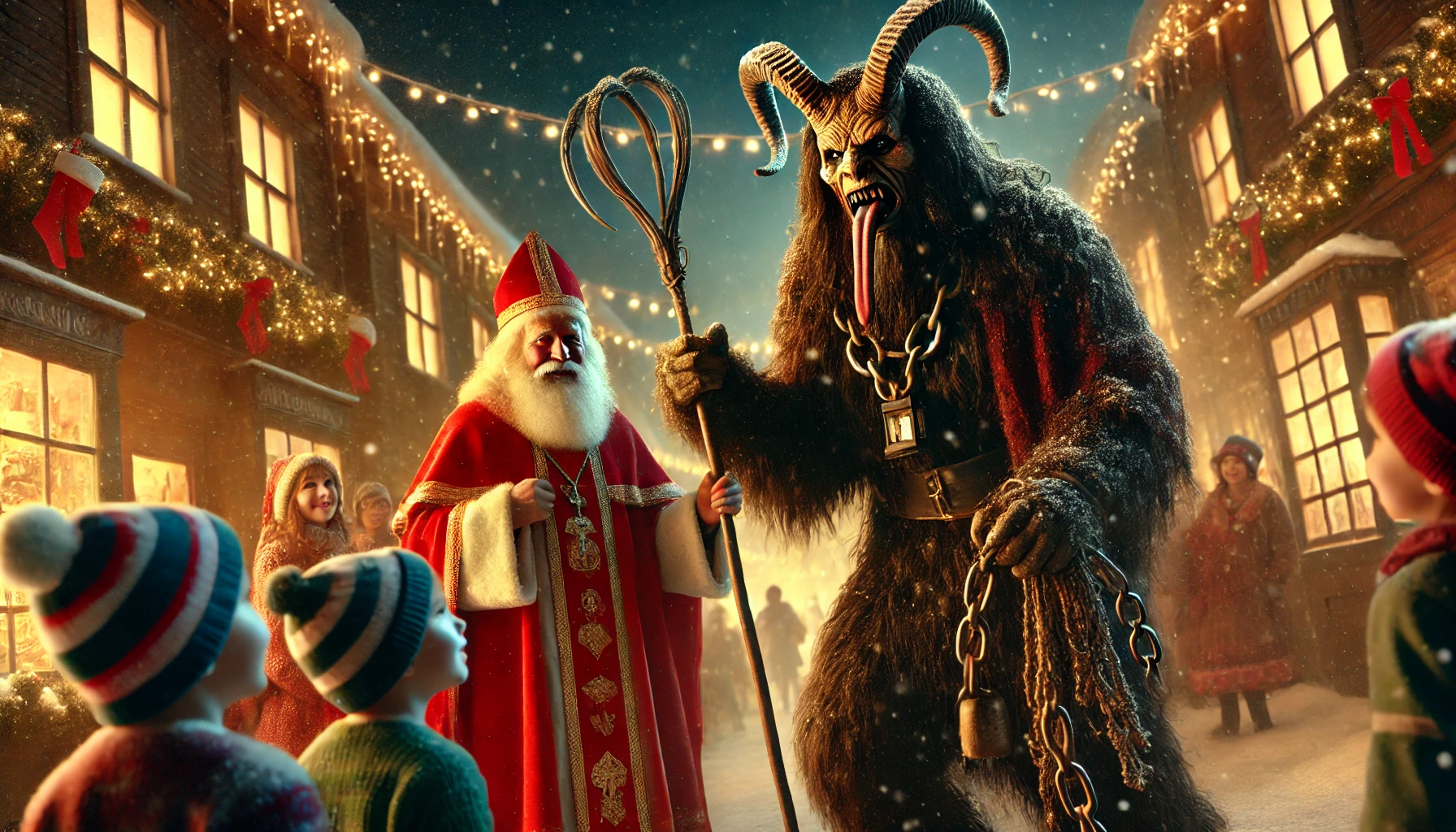
A terrifying figure designed to strike fear into misbehaving children, Krampus has a monstrous appearance that blends animalistic and demonic features. He is typically depicted as a hairy, beast-like creature, covered in black or brown fur, with goat-like horns, cloven hooves, and a long, flicking tongue that adds to his grotesque aura. Chains and bells often hang from his body, symbolizing his subjugation to Christian authority, while he wields a bundle of birch branches, or ruten, to whip naughty children. A sack or basket slung over his shoulder completes the image, used to carry away misbehaving children to his lair, which is often described as a hellish underworld.
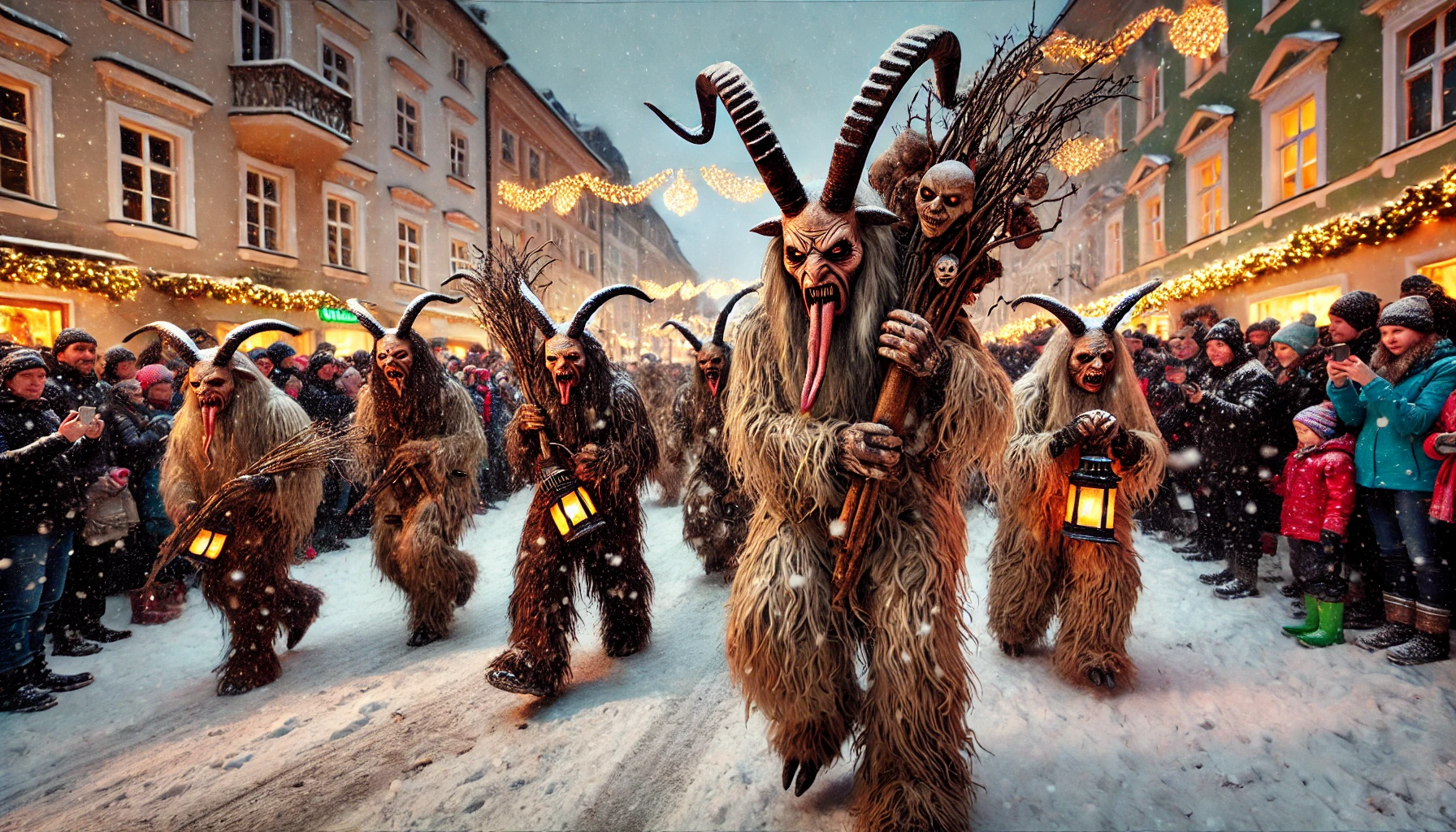
Krampus is most prominent in Alpine regions and Central Europe, where his menacing figure remains a deeply ingrained part of holiday traditions, with variations that reflect the cultural nuances of each region. In Austria, which is widely considered the heart of Krampus traditions, the annual Krampuslauf, or Krampus Run, takes center stage. These events feature adults dressed in elaborate and often grotesque costumes, parading through the streets to scare and entertain spectators, preserving a centuries-old custom with vibrant and chaotic energy.
In Germany, particularly in Bavaria, Krampus is an essential counterpart to Saint Nicholas. Here, he accompanies the saint during visits to children, embodying the dual nature of reward and punishment central to the holiday season’s moral messaging.
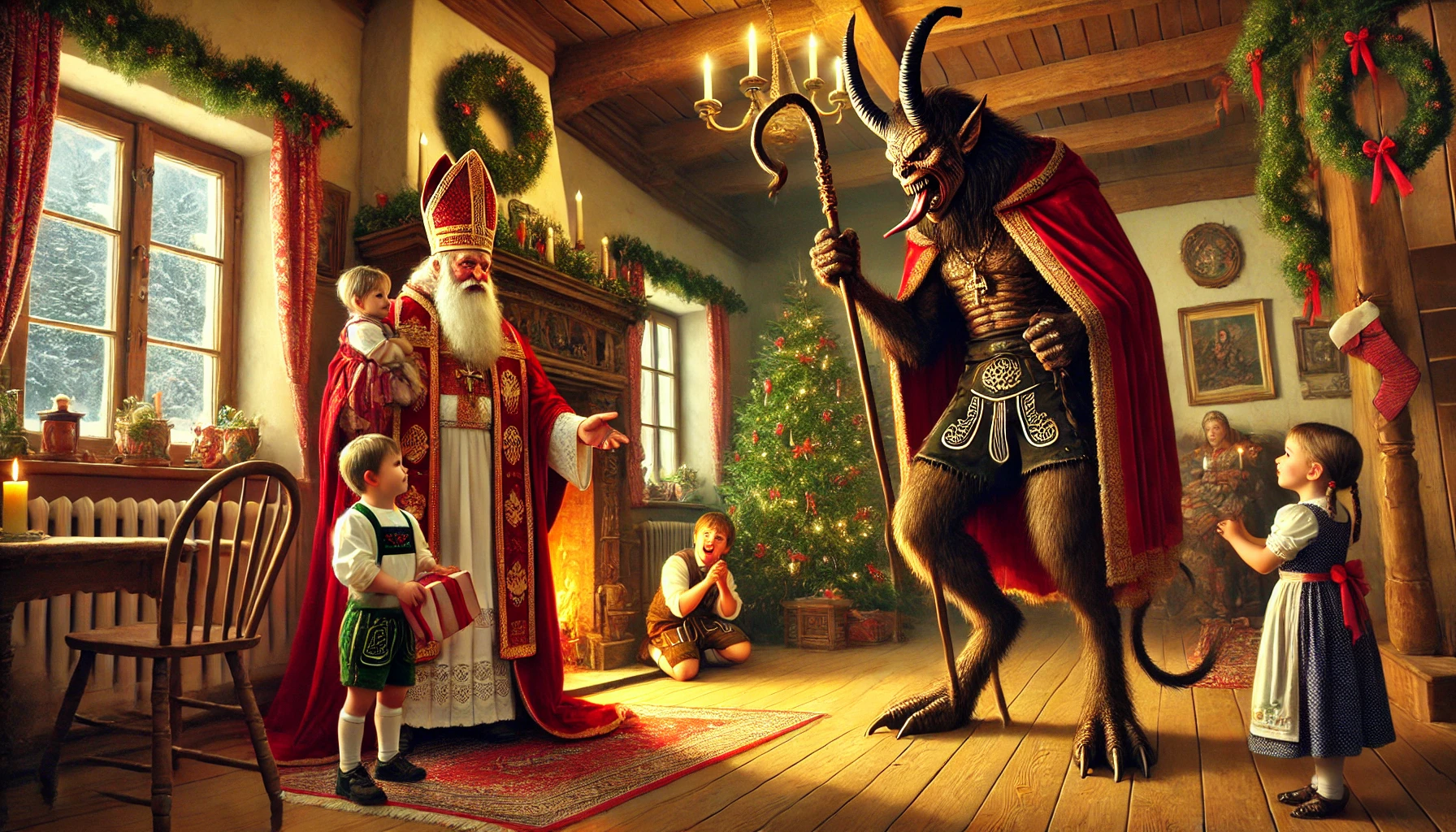
In Hungary, Krampus is known as Krampusz or Krampuszlauf, and the figure often takes on a more theatrical role during local celebrations, incorporating storytelling and playful performances to engage audiences. Slovenia also embraces the tradition, particularly on December 5th, Saint Nicholas Eve, when Krampus joins Nicholas in processions to homes, with dramatic interactions meant to teach lessons about behavior. Switzerland and Northern Italy, especially in regions with cultural overlap like South Tyrol, integrate Krampus into local customs, blending his terrifying imagery with other winter traditions unique to these areas. Each of these regions adapts Krampus to fit their cultural context, ensuring his legacy endures while reflecting the rich diversity of Alpine folklore.
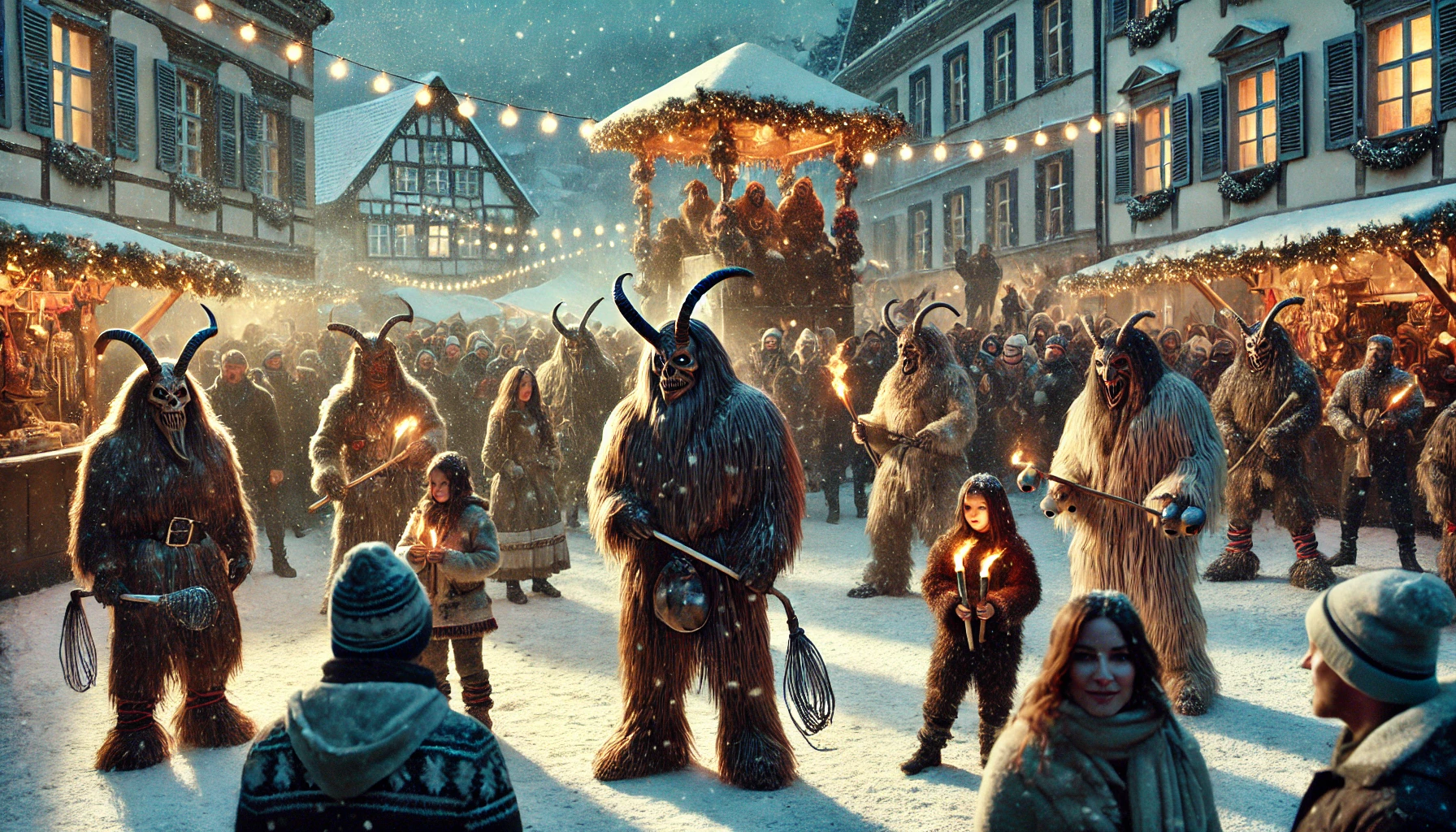
Krampus has experienced a remarkable resurgence in recent years, fueled by globalization and popular culture, which have introduced his chilling figure to a broader audience. On December 5th, the eve of Saint Nicholas Day, Krampusnacht (Krampus Night) has become a major draw in Europe, attracting tourists and enthusiasts who revel in the eerie festivities. Traditional Krampus parades and runs have expanded beyond their Alpine origins to appear in cities worldwide, including in North America, where they blend old-world customs with new-world enthusiasm. Films like Krampus (2015) and television features have brought the creature to popular media, sparking curiosity and fascination with his legend. This renewed interest has also given rise to themed merchandise, from Krampus cards and figurines to ugly sweaters that celebrate his sinister charm. Modern Krampus celebrations often balance the frightful elements with humor and community spirit, offering family-friendly adaptations of the traditional tales. This enduring and evolving figure now serves as a captivating blend of ancient folklore and contemporary holiday culture, bridging Christmas cheer with its darker, cautionary roots.
Feature art by Wanda Fraser , THOU in partnership with The Ghost Story Guys Podcast
Check out our new Redbubble Store for unique (and unusal) Haunting of Us Dark Art themed Christmas gifts.
If you would like to purchase a digital download of Wanda Fraser’s Dark Art check out the Haunting of Us Dark Art Digital Download shop. While you there use the code THOU10 for 10% off your purchase.
Now some of my artwork can be purchased on fabric. I will be adding more designs as I create them so keep an eye out!
Pages: 1 2 3 4 5 6 7 8 9 10 11 12 13 14 15 16 17 18 19 20 21 22 23 24 25 26 27 28 29 30 31 32
 The Haunting of Us